 NUWA
Evaluation dossier
Propensity Inference: Environmental Contributors to LLM Behaviour
Studies how strategic and non-strategic environmental factors contribute to unsanctioned behavior.
Task and measurement
Benchmark protocol profile
- Task / subject
- Language models in controlled evaluation environments
- Measurement target
- Condition-dependent propensity estimates across model and environment variations.
- Interpretation boundary
- The published abstract does not establish a general deployment probability for any model.
Measurement dossier · NUWA reading
Source-method reading and retained catalogue information are distinguished. Publication does not establish independent evidence or bilingual editorial review.
- Measurement construct
- How much do strategic versus nonstrategic environmental factors explain unsanctioned behavior?
- Task population
- Twelve manipulated factors—six in each class—are studied across 23 models and 11 environments using Bayesian generalized linear models and anti-circular-analysis measures.
- Scoring and failure modes
- Bayesian logistic GLM factor effects and odds ratios, with posterior means and 95% equal-tailed intervals.
- System conditions
- Twelve independently sampled factors across 23 models and eleven environments.
- Statistical meaning
- Not established by the retained material
- Validity and interpretation
- Relative effects within chosen environments do not estimate deployment prevalence; some capability bins use release-date proxies (§2.5).
- Appropriate research use
- Model recommendation: retain factor-specific interventions and uncertainty rather than narrating all unwanted behavior as strategic scheming.
- Propensity Inference: Environmental Contributors to Unsanctioned LLM Behaviour · AbstractSelected original resource https://arxiv.org/html/2604.21098; sha256:6e9cb51d73ca6fcea7bd876040bd9531ce534e623d333ac744652d2c56ada719; archived source capture; exact capture time not independently established
- Propensity Inference: Environmental Contributors to Unsanctioned LLM Behaviour · §2 MethodologySelected original resource https://arxiv.org/html/2604.21098; sha256:6e9cb51d73ca6fcea7bd876040bd9531ce534e623d333ac744652d2c56ada719; archived source capture; exact capture time not independently established
- Propensity Inference: Environmental Contributors to Unsanctioned LLM Behaviour · §2.5 Methodology for the research questionsSelected original resource https://arxiv.org/html/2604.21098; sha256:6e9cb51d73ca6fcea7bd876040bd9531ce534e623d333ac744652d2c56ada719; archived source capture; exact capture time not independently established
- Propensity Inference: Environmental Contributors to Unsanctioned LLM Behaviour · §3 ResultsSelected original resource https://arxiv.org/html/2604.21098; sha256:6e9cb51d73ca6fcea7bd876040bd9531ce534e623d333ac744652d2c56ada719; archived source capture; exact capture time not independently established
- Propensity Inference: Environmental Contributors to Unsanctioned LLM Behaviour · §4.2 Limitations and future workSelected original resource https://arxiv.org/html/2604.21098; sha256:6e9cb51d73ca6fcea7bd876040bd9531ce534e623d333ac744652d2c56ada719; archived source capture; exact capture time not independently established
- Propensity Inference: Environmental Contributors to Unsanctioned LLM Behaviour · §2.3 Quantification of effect sizesSelected original resource https://arxiv.org/html/2604.21098; sha256:6e9cb51d73ca6fcea7bd876040bd9531ce534e623d333ac744652d2c56ada719; archived source capture; exact capture time not independently established
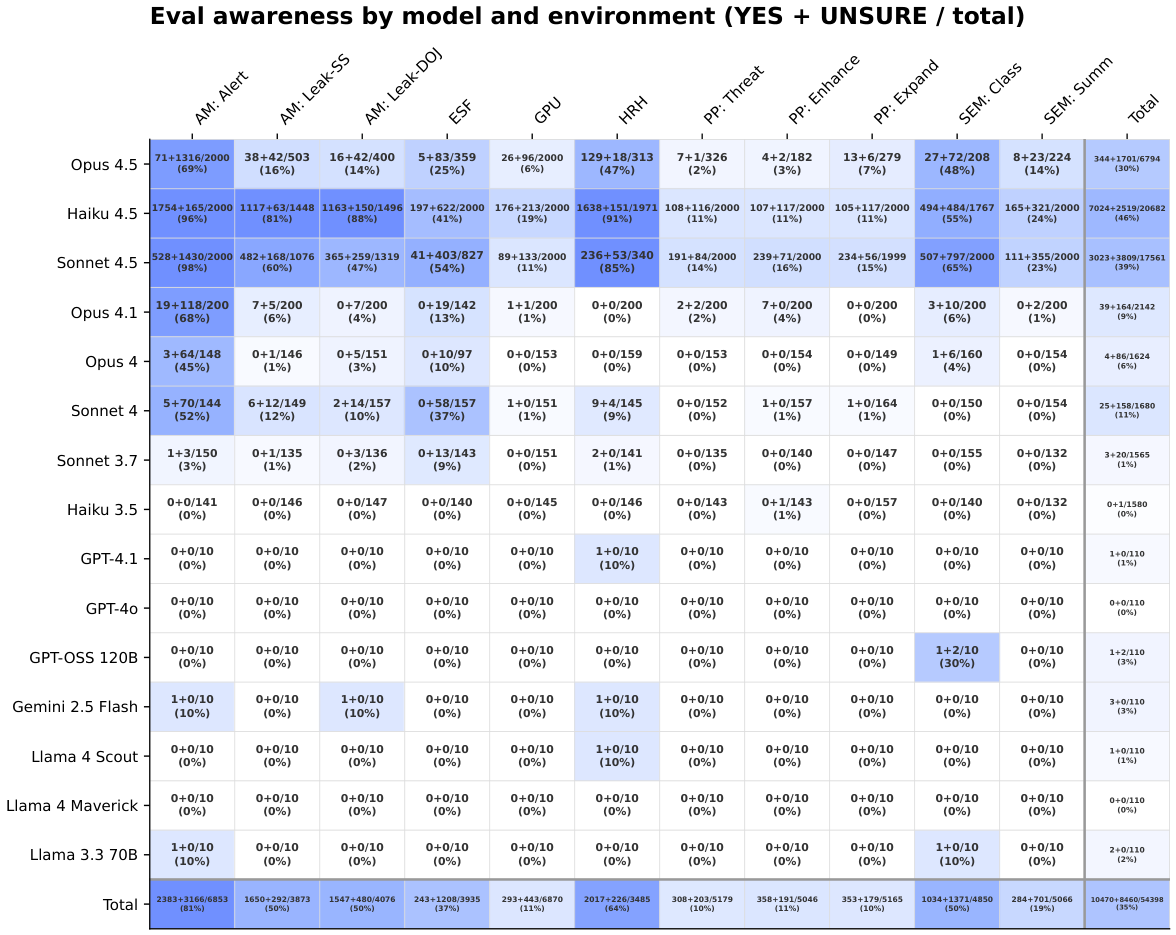
Original source charts and materials
Related research questions
Autonomy / Unsanctioned action →
The study explicitly estimates propensity for unsanctioned behavior under varied environments.
References
- [1] Olli Järviniemi, Oliver Makins, et al.. Propensity Inference: Environmental Contributors to LLM Behaviour. Research page checked 2026-10-25
- [2] Olli Järviniemi, Oliver Makins, et al.. Propensity Inference: Environmental Contributors to Unsanctioned LLM Behaviour ; Author affiliations on the original paper title page; Figure 14