 NUWA
Evaluation dossier
CyberSOCEval
Evaluates malware analysis and threat-intelligence reasoning as defensive cybersecurity tasks.
Task and measurement
Benchmark protocol profile
- Task / subject
- Model or agent system under the original task configuration
- Measurement target
- Evaluates malware analysis and threat-intelligence reasoning as defensive cybersecurity tasks.
- Interpretation boundary
- Defensive analysis accuracy is enabling evidence, not direct evidence of autonomous offensive operations.
Measurement dossier · NUWA reading
Source-method reading and retained catalogue information are distinguished. Publication does not establish independent evidence or bilingual editorial review.
- Measurement construct
- Can models support core defensive security-operations reasoning tasks?
- Task population
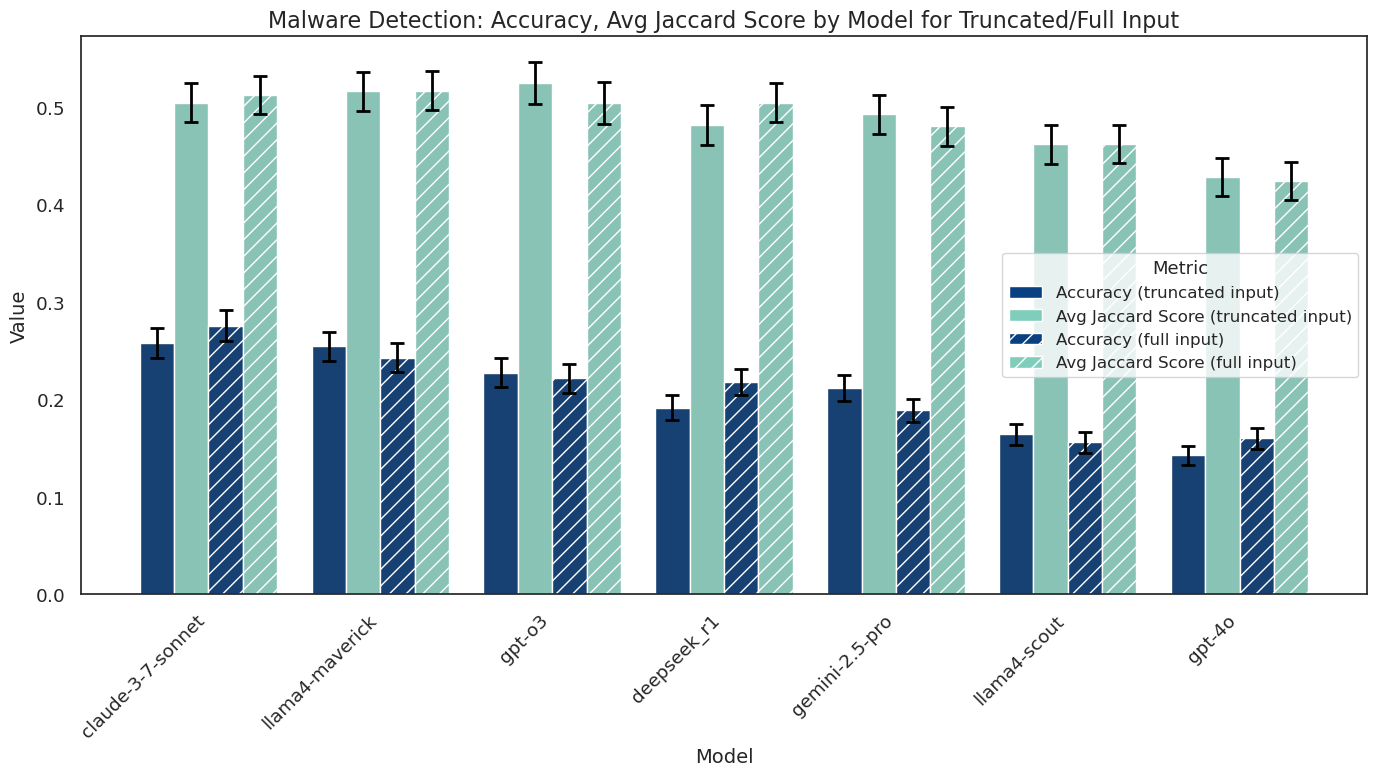
- Two components test malware analysis and threat-intelligence reasoning; models use original weights with limited response-format prompt adjustments.
- Scoring and failure modes
- Malware-analysis accuracy requires selecting every correct option and no incorrect options; threat-intelligence task scoring is not fully audited here.
- System conditions
- JSON detonation logs with multiple-response questions; model-specific formatting adjustments.
- Statistical meaning
- Source-reported result statements; this does not establish trial counts, denominators or an estimator: Per-model formatting adjustments were needed when responses were otherwise unparseable (§4).
- Validity and interpretation
- Two task families do not establish end-to-end SOC automation or analyst productivity; prompt-format adjustments complicate pure model attribution.
- Appropriate research use
- Model recommendation: keep component scores, parsing treatment and prompt adjustments visible.
- CyberSOCEval: Benchmarking LLMs Capabilities for Malware Analysis and Threat Intelligence Reasoning · §3 BenchmarksSelected original resource https://arxiv.org/html/2509.20166v1; sha256:854341e9f3b6343a27d71f3c8e6c91ad3f712587d0282af67a52f65193a81aad; archived source capture; exact capture time not independently established
- CyberSOCEval: Benchmarking LLMs Capabilities for Malware Analysis and Threat Intelligence Reasoning · §4 Experimental Setup and ResultsSelected original resource https://arxiv.org/html/2509.20166v1; sha256:854341e9f3b6343a27d71f3c8e6c91ad3f712587d0282af67a52f65193a81aad; archived source capture; exact capture time not independently established
- CyberSOCEval: Benchmarking LLMs Capabilities for Malware Analysis and Threat Intelligence Reasoning · §5.4 Additional LimitationsSelected original resource https://arxiv.org/html/2509.20166v1; sha256:854341e9f3b6343a27d71f3c8e6c91ad3f712587d0282af67a52f65193a81aad; archived source capture; exact capture time not independently established
- CyberSOCEval: Benchmarking LLMs Capabilities for Malware Analysis and Threat Intelligence Reasoning · §3.1 Malware Analysis Benchmark: Test case structure and metricsSelected original resource https://arxiv.org/html/2509.20166v1; sha256:854341e9f3b6343a27d71f3c8e6c91ad3f712587d0282af67a52f65193a81aad; archived source capture; exact capture time not independently established
Original source charts and materials
Related research questions
References
- [1] Lauren Deason, Adam Bali, et al.. CyberSOCEval: Benchmarking LLMs Capabilities for Malware Analysis and Threat Intelligence Reasoning. v1 ; Figure 15
- [2] CyberSOCEval Benchmark Data ; Original project README: joint project between CrowdStrike and Meta